The Shape Is the Secret: Nine Pin-Up Poses That Still Flatter Real Curves
Pin-up posing gets a bad reputation in some corners of the photo world, as if a bent knee and a raised brow are somehow less artistic than a thousand-yard stare into a fog machine. That is a shame, because the classic pin-up shapes are some of the most reliable, body-friendly tools a model and photographer can share. They were designed to show curve, create angles, and let personality do the heavy lifting. None of that has an expiration date.
What follows is a working library of nine shapes that still flatter real curves in 2026. Treat them as starting points, not rules. The best pose is the one that feels like the model owns the room.
Why These Old Shapes Still Work
Pin-up poses are built on three things: weight distribution, negative space, and the line of the body. They do not require a specific waist size or leg length. They require a camera that knows where to stand and a model who is not fighting her own skeleton. When a pose is comfortable, the body reads as relaxed. When the body reads as relaxed, the curves look intentional instead of strained.
Modern galleries have changed the lighting and the wardrobe, but the underlying geometry is the same. A hip pushed out still creates a curve. A knee bent still creates a triangle. A shoulder dropped still draws the eye. The trick is to adapt the shape to the set, not force the model into a vintage postcard.
1. The S-Curve Stand
Weight on the back leg, front knee soft, hip out, opposite shoulder dropped. This is the foundational pin-up shape and it still photographs like a dream. Keep the rotation modest, around twenty degrees, so the body does not look twisted. Camera slightly below chest height, lens around 50mm to 85mm, and a side light to carve the waist. High-waisted shorts and a fitted top let the line do the talking.
2. The Over-the-Shoulder Glance
Back to the camera, chin turned toward the shoulder, eyes to the lens. This shape flatters the back, the shoulder, and the jawline all at once. Use a halter or open-back wardrobe piece and a soft side light to keep the shoulder from going flat. It is also a natural place for a genuine smile, which never hurts. If the model has to strain her neck, the pose is too far. Bring the chin to the shoulder, not the shoulder to the chin.
3. The Stool Perch
Seated on a backless stool, knees together or crossed, one foot pointed. This is the pose that makes legs look a mile long without any digital help. Keep the spine tall and the shoulders back. A slight lean forward adds intimacy. Camera at chest height or a touch lower. A slip dress, a pencil skirt, or tailored shorts all work. The stool should be stable. A wobbly perch shows up in the shoulders.
4. The Wall Lean
Shoulder or hip against a wall, one knee bent, foot flat against the wall. This creates a clean triangle and a relaxed silhouette. It is especially good for vertical galleries and small spaces. Use a wall with texture or a simple seamless backdrop. Wardrobe with a little structure, like a cropped jacket or high-waisted trousers, keeps the shape crisp. Let the hands do something simple: one on the hip, one holding a strap.
5. The Reclining S
Lie on one side, bottom arm extended, top knee bent forward. This is the classic boudoir curve, and it still works because it follows the body's natural line. Support the head and hips with pillows so the model is not crunching her obliques. Camera at eye level, not looming above. Soft, diffused light from the front keeps the face open. A silky robe or a simple sheet does more than a complicated lingerie set here.
6. The Chair Step-Up
One foot on the seat of a chair, elbow on the knee, hand near the face. This shape creates angles everywhere: the leg, the arm, the torso. It reads as playful and purposeful at the same time. Use a solid chair with a low back so it does not compete with the model. Wide-leg pants or a skirt with movement work well. Keep the standing leg strong and the hips square enough to avoid a pinched waist.
7. The Knee-Hug
Seated, knees drawn up, arms wrapped around them. This is the cozy, approachable shape in the library. It flatters the shoulders and upper body and gives the face a natural frame. An oversized shirt, a sweater, or a structured corset all work. Camera low and close. The pose should feel like a pause, not a clenched fist. If the model cannot breathe, loosen the arms.
8. The Crossed-Ankle Stand
Feet crossed at the ankle, hands behind the back or resting on the hips, a slight lean forward. Simple, elegant, and almost impossible to get wrong. It lengthens the leg line and keeps the silhouette clean. Use it for full-length shots and let the wardrobe carry the color. A pointed toe adds polish. Keep the weight even so the pose does not look like a balance exercise.
9. The Playful Reach-Back
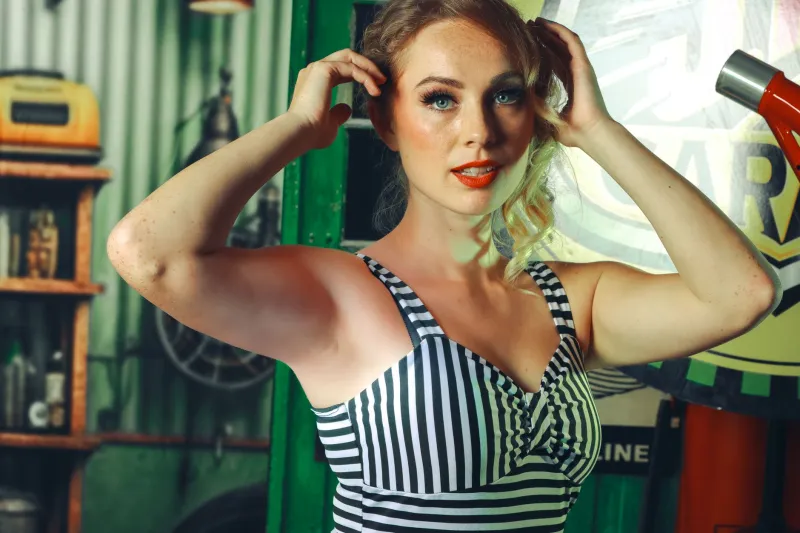
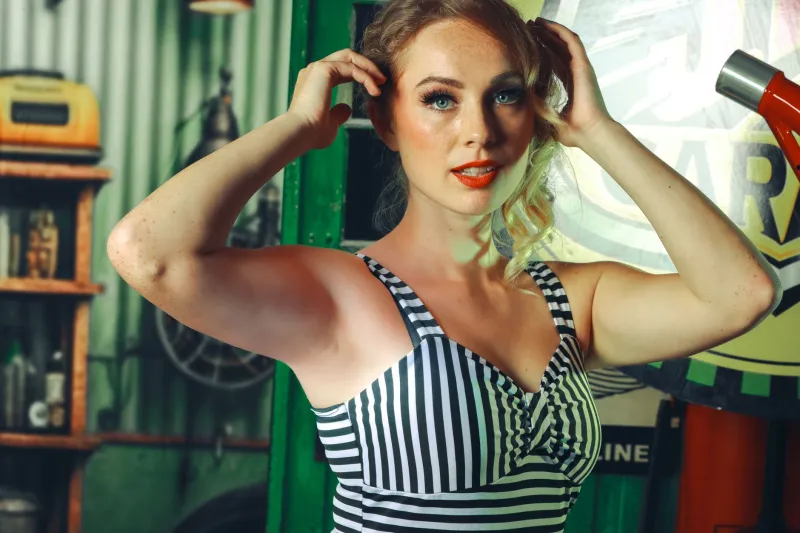
One hand reaching back to adjust hair or a strap, torso twisted, hips facing the camera. This shape adds a spiral to the body and reads as candid even when it is planned. Keep the shoulders relaxed and the reach easy. Wardrobe adjustments should be model-led. A photographer can suggest the shape, but the model decides how much fabric moves and where. Consent is not a mood killer. It is the reason the photo looks unforced.
Comfort Is the Real Technique
A pose that hurts is a pose that reads as hurt. The best galleries in 2026 are not the ones with the most complicated shapes. They are the ones where the model looks like she could hold the pose for another ten minutes and still be having fun. Modern LED panels and softboxes make it easier to light curves without flattening them. Modern wardrobe makes it easier to fit the body instead of fighting it. Modern camera angles, especially a slightly low lens and a normal-to-short telephoto range, make it easier to keep proportions honest.
Use the library. Then put it down. The shape is the secret, but the ease is the story.