The Flash-Ready Drawer: A Curve Model’s Lingerie Audit for Pin-Up Shoots
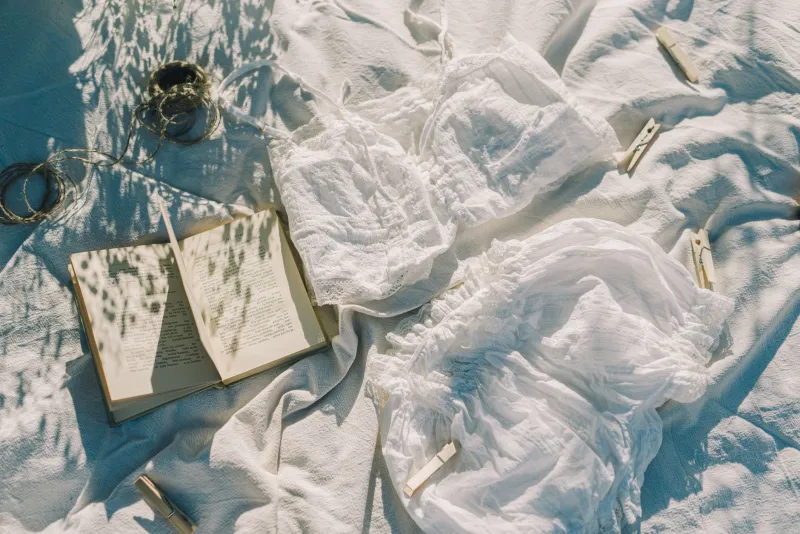
There is a special kind of disappointment that comes from pulling on a lingerie set you love in the mirror, stepping in front of a camera, and watching the photo turn into a glittery pile of visual noise. The bra fit fine. The color looked great in your bedroom light. But under flash, the shine blew out, the lace went fuzzy, and a horizontal seam landed exactly where you did not want attention. That is not a body problem. That is a drawer problem.
For pin-up and glamour work, lingerie has a second job beyond how it feels on. It has to read clean on camera. It has to cooperate with flash, hold its shape, and keep the classic mood without turning busy. So before your next shoot, do a drawer audit. Pull everything out, sort it into keep, alter, and retire, and judge each piece by how it behaves in photos rather than how it behaves on a hanger.
Start With a Phone Flash Test, Not a Vibe Check
You do not need a studio to spot the troublemakers. Put on the set, stand near a plain wall, and take a few phone photos with flash on. Then look at the images on a screen, not just in the camera preview. Flash is honest in a very specific way: it exaggerates sheen, flattens texture, and makes sheer fabric behave differently than it does in soft light. A satin bra that looks lush in person can turn into a white-hot highlight. A dark lace overlay can lose all its detail and read as a solid smudge.
This test also shows you where seams land. If a seam cuts across the fullest part of your bust or runs horizontally over your hip, flash will often make it louder. Vertical seams, princess seams, and side-support construction tend to read smoother. They guide the eye instead of interrupting it. That is not about hiding curves. It is about letting the shape do the talking.
The Keep List: Details That Read Clean on Real Curves
A few lingerie details are reliable in glamour photography because they create structure and contrast without visual clutter. High-waist bottoms are a pin-up staple for a reason: they create a long line, hold their shape, and photograph as a deliberate retro silhouette rather than a random band of fabric. Longline bras and bustiers do similar work up top by extending the line and giving the camera a clean edge.
Matte stretch mesh is another keeper. It photographs as texture without throwing glare, and it layers well under lace or trim. Look for wide straps and side support if you want a smoother read under flash. Those details distribute tension and keep the set from digging in, which means fewer shadows and less readjusting between shots. A balconette or a well-structured underwire can also give a classic pin-up lift without requiring a lot of padding. The goal is support that looks intentional, not armor that looks stiff.
Color matters too. Deep jewel tones, rich blacks, and warm neutrals tend to hold detail under flash. Bright neon and very pale pastels can blow out or go flat depending on your skin tone and the lighting. If you love a light color, test it first. Contrast is your friend, but contrast has to be controlled.
The Alter Pile: Good Bones, Wrong Execution
Some pieces are worth saving with a small fix. A beautiful bra with a shiny strap can often be swapped to matte elastic. A high-waist brief that fits well but has a fussy ruffle at the waistband might be cleaner with the ruffle removed or tucked. If a lace panel is scratchy or stiff, it may photograph as a hard edge; a soft mesh backing can smooth the read and make it more comfortable.
This is also the pile for fit tweaks. If a band rides up in back, it will create a shadow and a gap that flash loves to find. If a strap slips, you will see your hand in every other frame. A tailor or a quick alteration can turn a almost-great set into a shoot staple. The test is simple: does the fix remove distraction without removing the personality? If yes, alter it.
The Retire Pile: Gorgeous in Person, Busy on Camera
This is the hardest pile because some of these pieces are genuinely pretty. But glamour photography has a low tolerance for visual clutter. Heavy lace with dense floral patterns can moiré under flash. Multiple ruffles, bows, and contrast trims compete for attention. High-shine satin, metallic thread, and sequins can create blown highlights that swallow the shape underneath. Sheer fabrics with busy seams can cast shadows that look like fit problems even when the fit is fine.
Retire does not mean throw away. It means retire from camera duty. Keep the pieces you love for low-light photos, private wear, or mood-board inspiration. If a set has sentimental value, store it separately so you are not tempted to pack it for a shoot where it will fight the flash. The drawer should make the decision easy.
Build Around Three Anchors
A reliable shoot drawer does not need to be huge. Start with three anchors: a matte high-waist set in a deep solid color, a structured longline or balconette in a tone that contrasts cleanly with your skin, and a soft mesh layer that adds texture without shine. From there, add one or two personality pieces: a classic garter tab, a robe with a clean drape, or a simple corset with vertical seaming. Those anchors give you options without turning the drawer into a costume shop.
At PB Gals, the best pin-up looks are not the ones with the most going on. They are the ones where the curves, the confidence, and the classic mood all get room to breathe. A drawer audit is not about shrinking your options. It is about making sure every piece you pack has a job and does it well under the light you are actually shooting in. Keep what reads clean, alter what has good bones, and retire what turns busy. Your camera roll will thank you.