The Second-Scroll Secret: Building Pin-Up Galleries That Earn Another Look
There’s a certain kind of pin-up gallery that survives the fastest swipe on the internet. You see the first image, keep moving, and then—for some reason—you double back. Maybe it was the look over the shoulder. Maybe it was the way the set saved the best prop for frame nine instead of frame one. Either way, the gallery earned a replay, and that’s no accident.
In a scroll-past culture, replay value is the quiet flex. It isn’t about cramming in more photos or bigger production tricks. It’s about pacing, personality, and a little strategic mystery. At PB Gals, the best sets feel like they were built for a second visit—and a third one, when you’re in the mood to notice what you missed.
The First Frame Is a Handshake, Not the Whole Story
A strong opener has a job: introduce the mood without emptying the tank. The first photo should feel like a hello, not a finale. Think of it the way a good host works a party—you get a warm welcome at the door, not the entire life story before you’ve taken off your coat.
Creators, this means resisting the urge to lead with the most dramatic pose, the biggest prop, or the most direct stare. Start with a frame that sets the scene and gives the viewer a reason to keep going. A seated pose with relaxed shoulders. A half-turn near a vintage vanity. A smile that says there’s more where that came from. The first image is a promise. The rest of the gallery has to keep it.
For fans, pay attention to how the opening frame makes you feel. If it feels like a closed door, you’ll scroll on. If it feels like a wink, you’ll stay.
Sequence Is a Storyboard
A gallery is not a pile of pictures. It’s a sequence, and sequence is where replay value gets built. The order of images changes the emotional rhythm—tight crop to wide shot, playful to poised, direct gaze to a glance away. When a set bounces around randomly, the viewer gets tired without knowing why. When it builds, even subtly, the eye wants to follow.
A simple rule: don’t put two look-alike frames back to back. If image three is a close-up with a strong smile, image four might pull back to show the full outfit and the room. If the set has a prop, introduce it, use it, and then let it disappear for a few frames so it feels fresh when it returns.
This is also why a good gallery has a middle. Not every set needs a plot, but it needs a pulse. The middle frames can slow down, get a little more intimate in mood, or switch from polished glamour to a looser, candid feel. That contrast is what makes a second look worthwhile—you’re not just seeing more of the same, you’re seeing a different beat.
Eye Contact With a Little Mystery
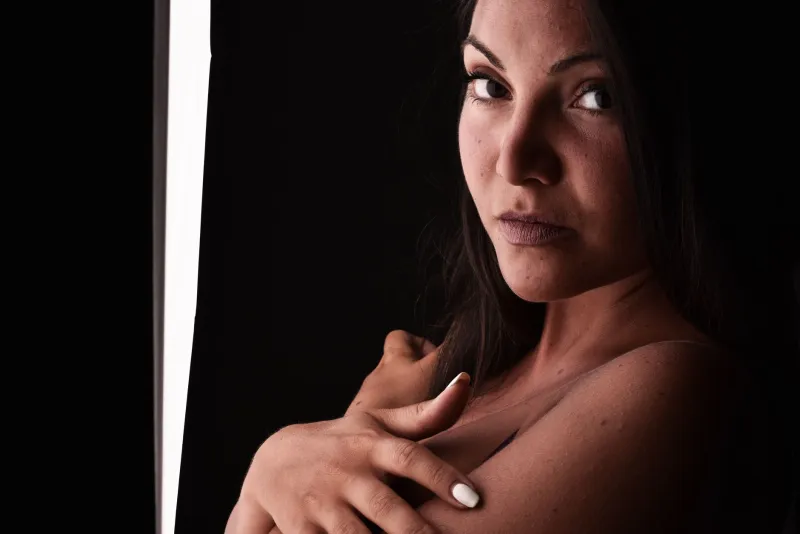
Eye contact is powerful, but a gallery that stares at the viewer in every single frame can burn out fast. The magic often lives in the mix: one direct look, one glance off-camera, one frame where the model seems caught mid-thought. That variety gives the viewer something to interpret.
For creators, treat eye contact like seasoning. A direct gaze in the opener can be inviting. A sideways glance in the middle can feel playful. A softer, almost private look near the end can make the whole set feel like a moment rather than a performance. The goal isn’t to avoid the camera—it’s to make each connection feel intentional.
Fans often feel this without naming it. A set that holds attention usually gives you room to wonder what the model is thinking. That tiny bit of mystery is a replay magnet.
Let Props Breathe
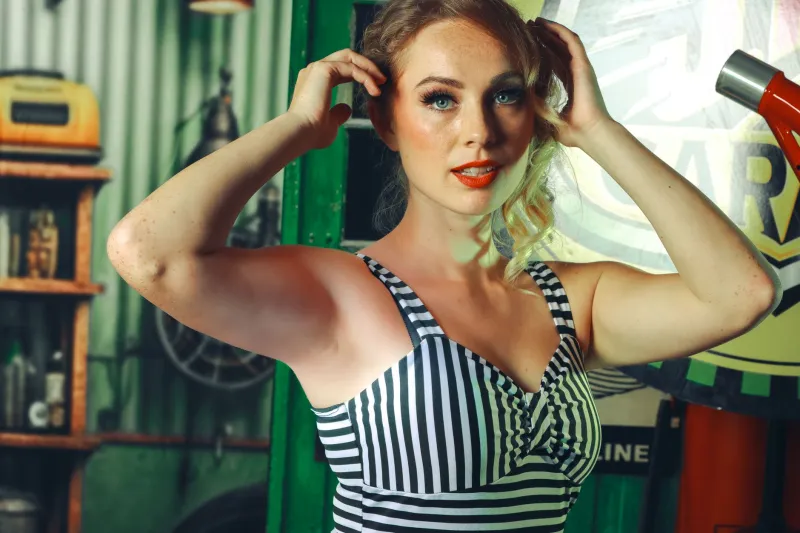
Vintage props are fun. A rotary phone, a folding fan, a cherry-red compact, a picnic basket—they can add charm and color. But props work best when they’re paced, not piled up. If every frame is stuffed with visual business, the viewer’s eye has nowhere to rest.
A prop should earn its screen time. Maybe it appears in the opening frame as a background detail, gets used in the middle, and then returns in a final shot with a different meaning. That kind of pacing makes a gallery feel designed rather than decorated.
Creators can also use props to solve pose problems. A fan gives the hands something to do. A chair changes the silhouette. A hat can frame the face or create a playful reveal. But the prop should support the personality, not replace it. The second look should be about the model, not the stuff around her.
Restraint Is the Hook
Perhaps the most underrated replay tool is restraint. A gallery doesn’t need to show everything in the first ten seconds. Strategic withholding—a pose that suggests rather than declares, a crop that leaves a little to the imagination, a final frame that ends on a warm note instead of a chaotic one—creates a lingering feeling.
That doesn’t mean the set is shy. It means it trusts the viewer. In 2026, audiences are bombarded with content, and the sets that stand out often feel confident enough to slow down. Restraint is not the absence of glamour. It’s glamour with a sense of timing.
What Fans Can Notice on a Second Pass
If you already have favorite galleries on PB Gals, try a second look with a different focus. Watch the background from frame to frame—does the light shift? Does the set tell a small story? Notice how many times the model looks directly at the camera versus away. Count the prop appearances. You’ll start to see the architecture underneath the charm.
That’s the fun of a replay-friendly gallery: it rewards attention without demanding homework. You don’t need to analyze it like a film student. You just need to give it another minute and let the details surface.
A Replay-Ready Set Starts With Respect
All the sequencing tricks in the world can’t rescue a set that feels rushed or uncomfortable. The best galleries start with clear boundaries, a relaxed shoot day, and a model who feels like a collaborator rather than a mannequin. That ease shows up in the photos. It’s the difference between a pose that looks held and a moment that looks lived-in.
So whether you’re building a gallery or simply enjoying one, remember that replay value is built on care. A strong opener, a thoughtful sequence, a little eye-contact variety, props that breathe, and the confidence to hold something back—that’s the recipe. The first look gets the click. The second look is where the charm really settles in.